
Designing an Efficient Home Energy System
When designing an efficient home energy system, you'll want to start by evaluating your energy needs, tracking past utility bills, and conducting a total consumption calculation to identify areas for improvement. Next, perform a home energy audit to detect inefficiencies and opportunities for reduction. Consider solar power systems, choosing the right battery, and sizing your solar array to meet your unique energy requirements. Don't forget to implement energy efficiency upgrades, such as insulation, LED lighting, and smart thermostats, to minimize waste. By integrating these components and optimizing your system, you'll be well on your way to creating a streamlined, eco-friendly energy solution that's customized to your needs - and there's more to investigate to guarantee you're getting the most out of your system.
Overview
- Calculate energy consumption profiles to identify usage patterns and optimize energy supply.
- Conduct a thorough home energy audit to identify inefficiencies and opportunities for improvement.
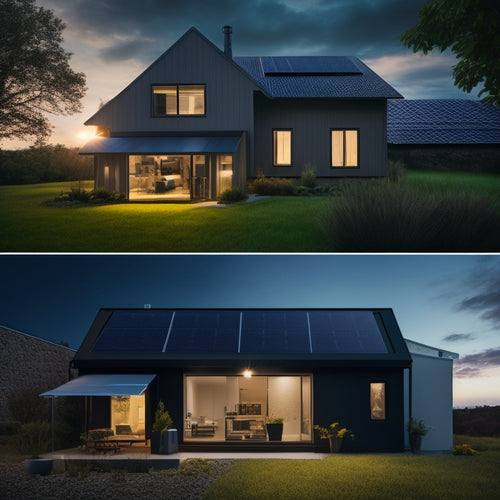
- Design solar power systems tailored to energy needs, considering roof space constraints and energy requirements.
- Choose the right battery based on energy storage requirements, system compatibility, and environmental impact.
- Implement energy efficiency upgrades, such as insulation, air sealing, and energy-efficient appliances, to minimize energy consumption.
Assessing Your Energy Needs
To determine the most efficient home energy system for your needs, you must first calculate your energy consumption profile. This involves tracking your energy usage patterns over a period of time to identify areas of high energy consumption.
You can do this by reviewing your past utility bills, monitoring your energy usage in real-time, or using specialized software to analyze your energy consumption. By understanding your energy usage patterns, you can identify opportunities to reduce your energy consumption and optimize your energy system.
Evaluating energy needs through a total consumption calculation and energy audit is vital in determining the right system size and type. This will enable you to make informed decisions about the type and size of energy generation and storage systems you need, ensuring you have a reliable and efficient energy supply that meets your unique needs.
Home Energy Audit Tips
Conducting a thorough home energy audit is essential to identifying areas of inefficiency and opportunities for improvement.
You'll need to gather utility bills, inspect insulation, and evaluate appliance ratings to understand your energy consumption.
Employ audit tools to assess your home's building envelope, HVAC performance, and lighting systems.
Compare your findings to efficiency benchmarks to pinpoint areas for improvement.
To accurately calculate your daily energy consumption, calculate daily energy consumption in watt-hours (Wh) or kilowatt-hours (kWh) and conduct an energy audit to identify energy-hungry appliances and their wattage.
Consider renewable options to reduce your reliance on traditional energy sources.
A detailed audit will provide a clear representation of your energy usage, helping you make informed decisions to optimize your energy system and reduce your environmental footprint.
Solar Power Systems for Homes
Your home's energy independence is within reach with solar power systems, which convert sunlight into electrical energy.
These systems employ renewable technology, reducing your reliance on the grid and decreasing your carbon footprint. You can take advantage of solar incentives, such as tax credits and rebates, to offset the initial investment.
By understanding your energy needs assessment, you can design a system that meets your specific requirements. Additionally, by considering factors like panel durability, you can guarantee a long-lasting and efficient system.
By installing a solar power system, you'll generate clean energy and lower your utility bills. With a properly sized system, you can power your home's appliances, lighting, and HVAC system.
Choosing the Right Battery
You need to select a battery that meets your energy storage requirements and integrates seamlessly with your solar power system.
When choosing a battery, you'll want to compare different types, such as lead-acid, lithium-ion, and saltwater batteries, considering factors like energy storage capacity and lifespan.
Battery Type Comparison
The selection of a suitable battery type is a critical component of an efficient home energy system, as it directly impacts the overall performance, reliability, and cost-effectiveness of the system. You'll need to evaluate the pros and cons of each option to make an informed decision.
| Battery Type | Lithium-Ion | Lead-Acid |
|---|---|---|
| Battery Lifespan | 10-15 years | 5-7 years |
| Cost Comparison | Higher upfront cost | Lower upfront cost, higher maintenance |
| Environmental Impact | Low toxic material, recyclable | Higher toxic material, less recyclable |
| Discharge Rates | 0.5-1C | 0.1-0.3C |
Lithium-ion batteries offer advantages like longer lifespan, higher discharge rates, and lower environmental impact, but come with a higher upfront cost. Lead-acid batteries, on the other hand, have drawbacks like shorter lifespan, lower discharge rates, and higher environmental impact, but are more affordable upfront.
Energy Storage Capacity
Determining the required energy storage capacity is an essential step in choosing the right battery for your efficient home energy system.
You'll need to calculate your daily energy usage and consider your energy management goals. Do you want to store excess energy generated during the day for nighttime use or provide backup power during outages?
Consider your battery's lifespan and cycle life, as well. A higher capacity battery may provide more energy storage, but it may also be heavier, larger, and more expensive.
You'll need to strike a balance between capacity and cost. By accurately determining your energy storage needs, you can select a battery that meets your requirements, ensuring a reliable and efficient home energy system that provides you with the freedom you desire.
System Integration Needs
System integration needs play a critical role in selecting the right battery for your efficient home energy system.
You'll need to guarantee that your battery is compatible with your existing system components, such as solar panels and inverters.
System compatibility challenges can arise if you don't consider integration technology trends, like smart charging and load management.
You should look for batteries with advanced integration capabilities, like wireless communication and remote monitoring.
This will enable seamless integration with your system and optimize energy storage and usage.
Sizing Your Solar Array
When sizing your solar array, you'll need to assess the constraints of your roof space to determine the maximum number of panels that can fit.
Next, you'll calculate your energy requirements based on your home's energy usage patterns and local solar irradiance.
Assessing Roof Space Constraints
Across your roof, a complex dance of obstacles and opportunities awaits as you prepare to size your solar array.
You'll need to assess roof space constraints to guarantee a harmonious coexistence between your solar panels and roof structure.
Consider roof orientation, which affects energy output, and conduct a shading analysis to identify areas that receive direct sunlight.
Ascertain your roof's structural integrity can support the added weight of solar panels.
Familiarize yourself with local regulations governing solar installations, as they may impact installation costs.
Think about future expansion and how it may impact your system's design.
Aesthetic considerations, such as panel color and layout, should also be factored in.
Calculating Energy Requirements
Having assessed your roof's constraints, you're now ready to determine how much energy your solar array needs to produce.
To do this, you'll need to calculate your energy consumption by analyzing your past utility bills and identifying your peak demand. This will help you create an energy budget, guaranteeing your solar array produces enough energy to meet your needs.
Consider your usage patterns, appliance ratings, and energy monitoring data to accurately forecast your load. Aim to maximize efficiency metrics by optimizing your system's scalability and incorporating renewable sources.
Optimizing Panel Configuration
Determine the ideal panel configuration for your solar array by considering the available roof space, local building codes, and the desired energy output.
You'll want to optimize panel orientation to maximize energy production, taking into consideration the direction your roof faces and the angle of the sun.
Conduct a shading analysis to identify areas where trees, buildings, or other obstructions may cast shade on your panels. This will help you determine the best layout to minimize energy losses.
Energy Efficiency Upgrades
Your home's energy system is only as efficient as its weakest link, and that's why energy efficiency upgrades are essential to minimizing energy waste and maximizing savings.
To achieve this, consider insulation upgrades to prevent heat loss, and air sealing to eliminate air leaks. Replace traditional lighting with LED lighting, which consumes considerably less energy.
Upgrade to energy efficient appliances and renewable materials to reduce your carbon footprint. Smart thermostats with programmable controls will help you optimize your heating and cooling systems.
Additionally, consider window replacements and upgrading your heating and cooling solutions to more efficient models.
Optimizing Your Energy System
This optimized energy system relies on the seamless integration of its components to maximize efficiency and minimize waste. By leveraging advanced technologies, you can create a customized system that responds to your unique energy needs.
| Energy Efficiency Strategies | Benefits | Technologies |
|---|---|---|
| Load Management | Reduced peak demand, lower bills | Smart thermostats, HVAC optimization |
| Demand Response | Grid stability, renewable incentives | Grid connectivity, energy monitoring |
| Energy Conservation | Minimized waste, environmental benefits | Peak shaving, usage patterns analysis |
Frequently Asked Questions
Can I Mix Different Types of Renewable Energy Sources in My System?
You can combine different renewable energy sources, like solar and wind, into hybrid systems, which improve overall performance and reduce reliance on individual sources; incorporating energy storage and performance monitoring guarantees a reliable and efficient energy supply.
How Do I Ensure My Energy System Is Compatible With Grid Tie?
You're trading energy independence for grid reliance, but to guarantee a harmonious relationship, you'll need to synchronize with the grid, choosing an inverter that's compatible, and implementing energy management and load balancing systems to ensure a seamless exchange.
Do Energy-Efficient Appliances Really Make a Significant Difference?
You'll find that energy-efficient appliances indeed make a significant difference, offering substantial energy savings, extended appliance lifespan, and reduced environmental impact, making them a worthwhile investment when considering cost comparison and consumer awareness of technology advancements.
Can I Install a Home Energy System Myself to Save Money?
You can attempt a DIY installation to save money, but it's essential to weigh the risks: improper installations can lead to reduced system efficiency, safety hazards, and voided warranties, potentially offsetting any initial cost savings.
Are There Any Government Incentives for Home Energy System Upgrades?
As you commence on a greener path, you'll uncover a wealth of government incentives awaiting you. You can capitalize on federal programs, tax credits, local incentives, energy rebates, and financing options through utility programs, enabling you to upgrade your home energy system with confidence.
Ready to Buy
You've finally cracked the code to designing an efficient home energy system! With a thorough assessment of your energy needs, a sleek solar power system, and the perfect battery, you're ready to kiss those hefty electricity bills goodbye. And let's not forget those energy-sucking vampires - inefficient appliances and lighting - banished forever! Your optimized energy system is now a finely-tuned machine, humming along like a well-oiled engine, saving you a small fortune and the planet a whole lot of carbon emissions.
Related Posts
-

Top Portable Refrigerators for Camping Adventures
When you're camping, having a reliable portable refrigerator can make all the difference for keeping your food fresh ...
-

Why Outdoor Solar Lighting Systems Are Sustainable
Outdoor solar lighting systems are sustainable because they utilize renewable energy, drastically reducing your carbo...
-
Cost of Home Solar Battery
You're looking to invest in a home solar battery to reduce your grid reliance, but you're curious about the cost. The...
